Prof. Dr. Cristiano Torres
The Apolobamba mountain range, situated in the Andes, is experiencing significant climatic changes that are impacting its glaciers and ecosystems. Rising temperatures have led to accelerated melting of the glaciers, which are crucial for maintaining local water supplies and supporting biodiversity in the region. This reduction in ice cover not only threatens the delicate balance of the alpine ecosystem but also poses challenges for the indigenous communities that rely on glacial meltwater for agriculture and drinking water. As glaciers shrink, the risk of glacial lake outburst floods increases, presenting further hazards to local populations. Additionally, the loss of ice affects regional weather patterns, potentially altering precipitation levels and increasing the frequency of extreme weather events. Addressing these climatic changes is vital for preserving the unique environment of the Apolobamba range and ensuring the sustainability of the communities that inhabit it.
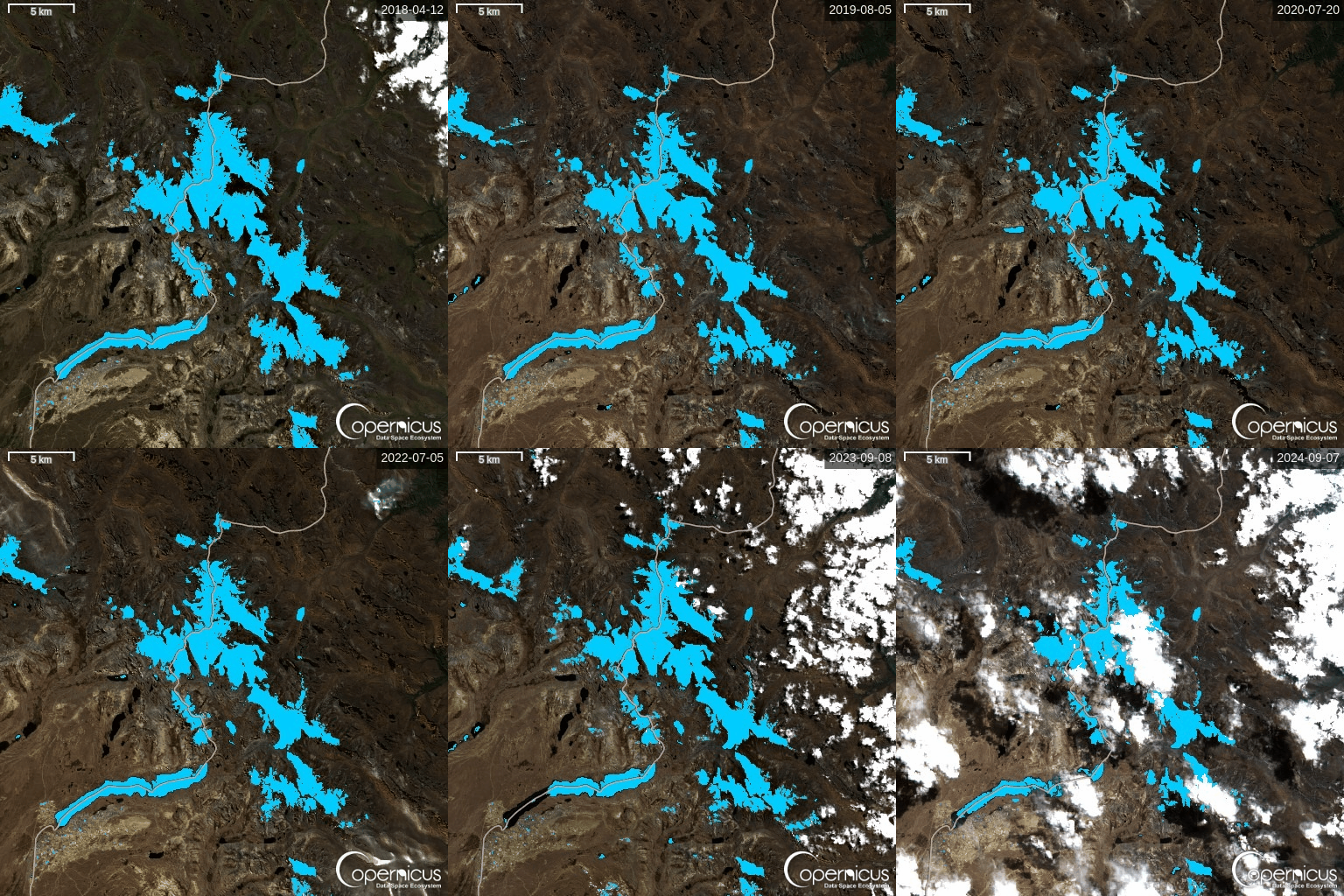
I present below an animation produced with images from the Sentinel-2 satellite, processed using the Normalised Difference Snow Index (NDSI) script, available on the Copernicus platform [1]. Satellite images confirm the drastic reduction of ice at the top of the Apolobamba mountain range.
The Sentinel-2 normalised difference snow index can be used to differentiate between cloud and snow cover as snow absorbs in the short-wave infrared light, but reflects the visible light, whereas cloud is generally reflective in both wavelengths. In the visualization script snow cover is represented in bright vivid blue [2].
DOI: https://doi.org/10.5281/zenodo.15272063
[1] https://lnkd.in/d_-V5chB
[2] https://lnkd.in/dz2bGCPn
A cordilheira Apolobamba, situada nos Andes, está passando por mudanças climáticas significativas que estão impactando seus glaciares e ecossistemas. O aumento das temperaturas levou ao derretimento acelerado dos glaciares, que são cruciais para a manutenção dos suprimentos de água locais e para o suporte à biodiversidade na região. Essa redução na cobertura de gelo não apenas ameaça o delicado equilíbrio do ecossistema alpino, mas também representa desafios para as comunidades indígenas que dependem da água do degelo para a agricultura e o abastecimento de água potável. À medida que os glaciares encolhem, o risco de inundações por rompimento de lagos glaciares aumenta, apresentando mais perigos para as populações locais. Além disso, a perda de gelo afeta os padrões climáticos regionais, podendo alterar os níveis de precipitação e aumentar a frequência de eventos climáticos extremos. Abordar essas mudanças climáticas é vital para preservar o ambiente único da cordilheira Apolobamba e garantir a sustentabilidade das comunidades que nela habitam.
Apresento a seguir uma animação produzida com imagens do satélite Sentinel-2, processadas utilizando o script do Índice Normalizado de Diferença de Neve (NDSI), disponível na plataforma Copernicus. Imagens de satélite comprovam a redução drástica de gelo no topo da cordilheira Apolobamba. O índice normalizado de diferença de neve do Sentinel-2 pode ser usado para diferenciar entre nuvens e cobertura de neve, uma vez que a neve absorve a luz no infravermelho de onda curta, mas reflete a luz visível, enquanto as nuvens geralmente são reflexivas em ambas as comprimentos de onda. Na visualização, a cobertura de neve é representada em um azul vivo e brilhante.
[1] https://lnkd.in/d_-V5chB
[2] https://lnkd.in/dz2bGCPn
Citation
Torres do Amaral, C. (2025). Reduction of the glacier in the Andes. In Amazontech: Revista de Estudos Interdisciplinares (Vol. 7, Número 1). DOI: https://doi.org/10.5281/zenodo.15272063



 Amazontech: Journal of Interdisciplinary Studies - ISSN 2675-701X